
Superemos Annual Report for 2019
General
2019 was a good year for Superemos. Our programs successfully met the needs of a large number of people in and around the city of Estelí. We continued to develop important institutional relationships with the local municipal and university authorities, with the relevant government ministries and with various faculties of the University of Boston.
Thanks to help from our supporters we were able to remodel the kitchen so as to create more space for cooking and baking training activities and better facilities for the often very busy catering work involved in serving food and refreshments to the many people taking part in our education and training activities.
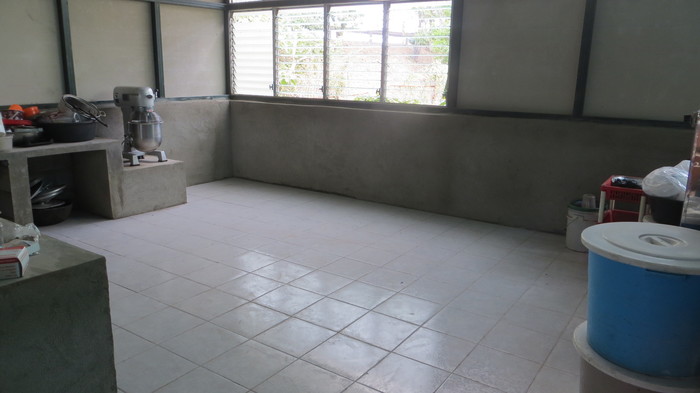
The new space for baking activities, January 2019
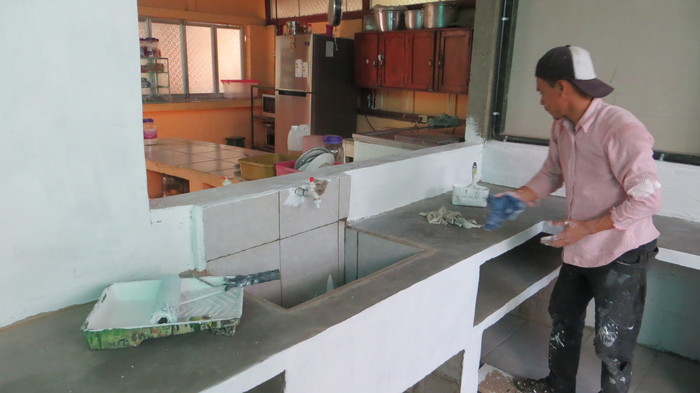
Ajax Lezama cleans up after painting the worktop surfaces
Among other activities to improve the environment at the Superemos site we have been clearing the area immediately adjacent to the river to eventually create a recreational park for our students, especially for our younger students. We have coordinated with the authorities responsible for the park and recreational areas in Managua and hope by the end of 2020 to have a well shaded green space with facilities for sports and other activities.
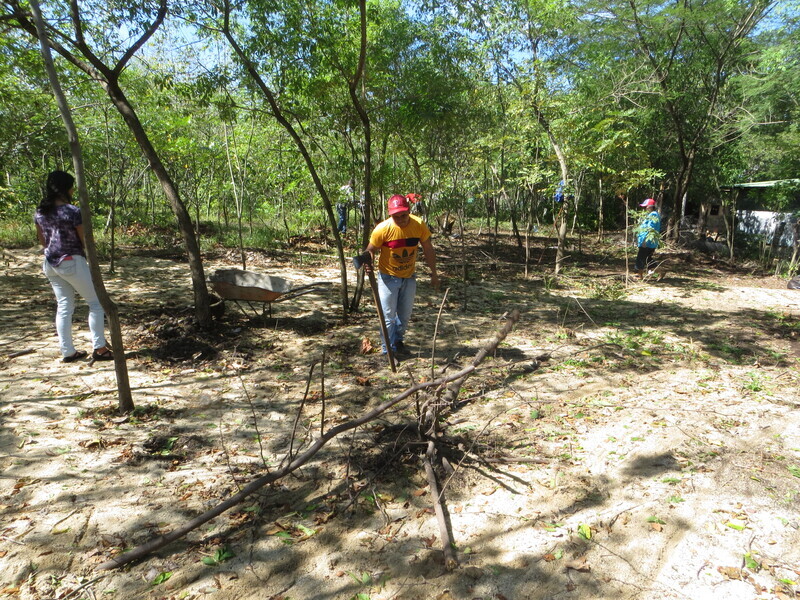
Clearing and leveling the new recreational park area
For six months in 2019, French masters student Najwa Hariri assisted our programs, at the same time improving her own community development skills. We are very grateful to Najwa for helping us improve our methodology for evaluating the impact of our different programs.
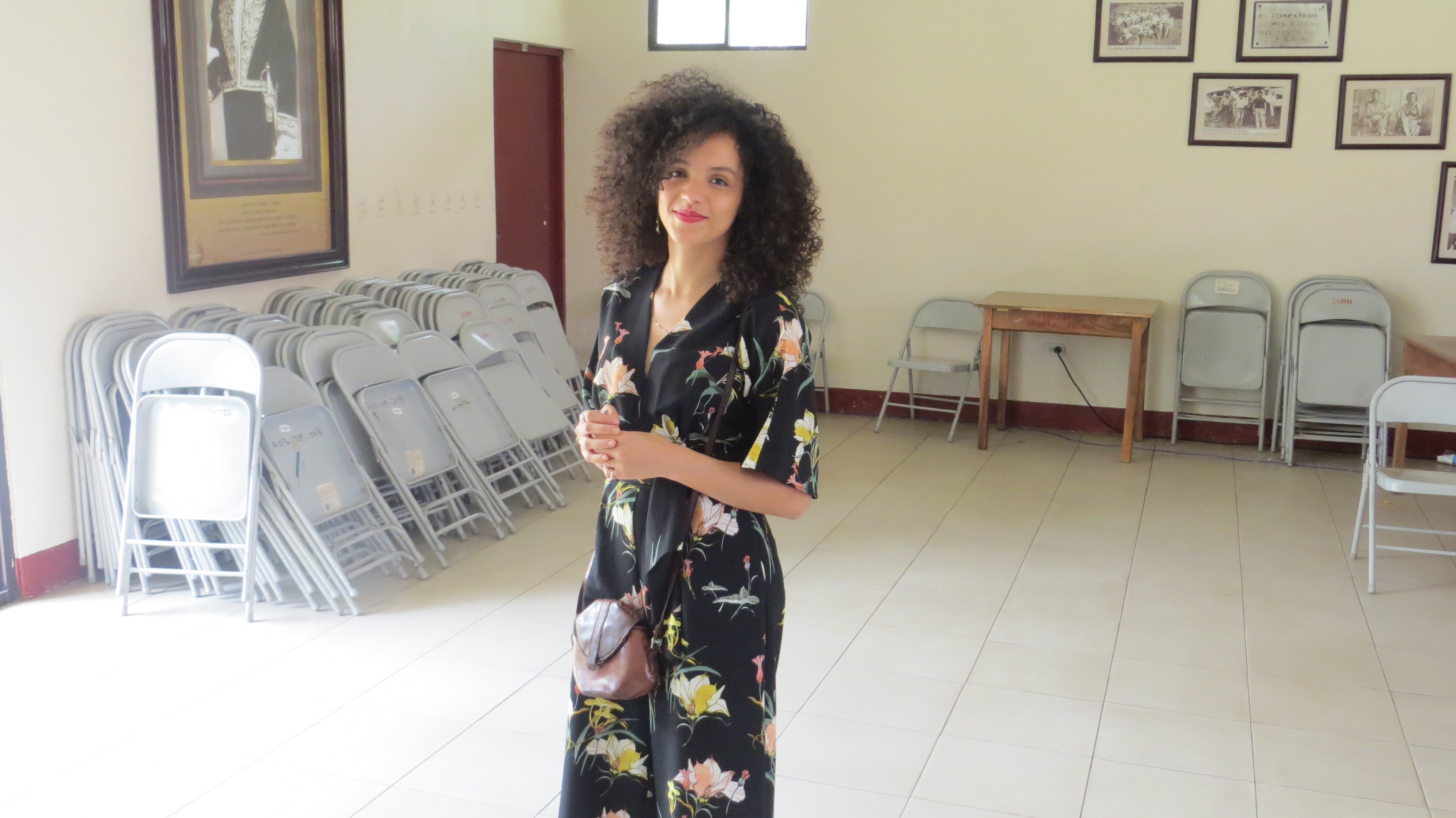
Najwa Hariri
In September 2019 we received a visit from the Ayuda Nicaragua Association of Japan who have supported our environmental work for almost 20 years. This year delegation included our dear friends Yukiyoshi Ito, Kenji Ishizu and Dr. Yasuhiro Koike.
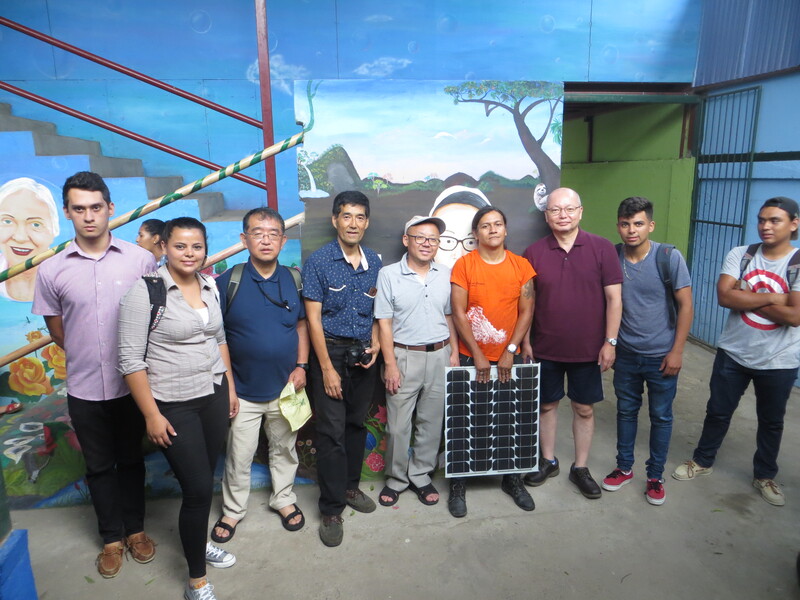
Visit from the Ayuda Nicaragua Association of Japan who support our solar power education activities
In October 2019, Superemos hosted a visit by Dr. Agustín Velloso of Spain's National Distance Learning University to exchange experiences with teaching staff and students at the Regional Multidisciplinary Faculty of Nicaragua's National Autonomous University in Estelí.
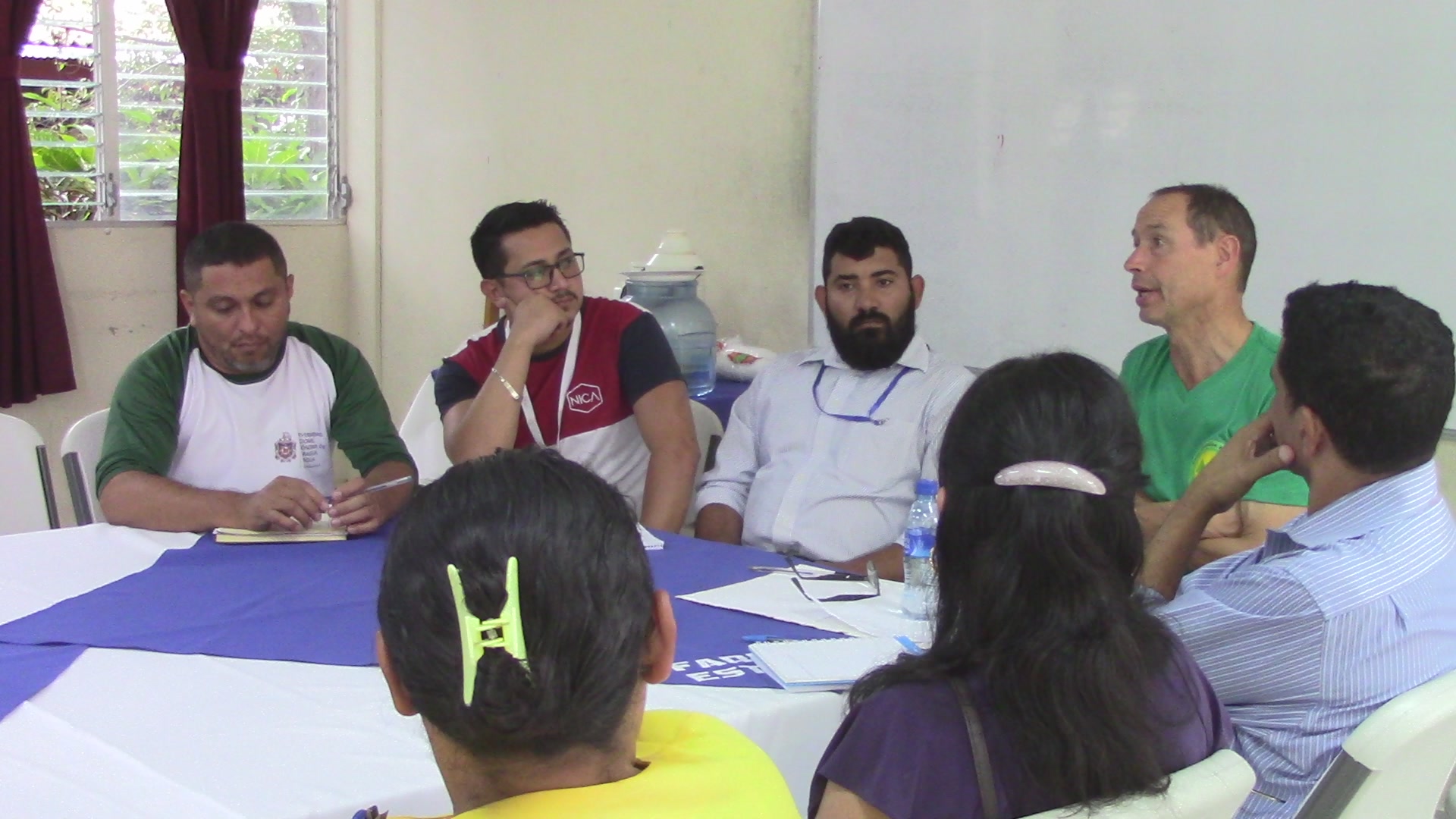
Dr. Agustín Velloso (right) of Spain's University of Distance Learning with colleagues
of the Regional Multidisciplinary Faculty of Nicaragua's National Autonomous University in Estelí
Cele Meyer - 1922-2019
Everyone at Superemos was extremely sad to learn of the passing of Cele Meyer. Cele supported the work of Superemos from its inception in 1999 immediately after the devastation caused by Hurricane Mitch across northern Nicaragua in October 1998. At that time Cele and her colleagues of the De Kalb Inter Faith Network raised thousands of dollars to support our relief and reconstruction work. Subsequently, Cele and the De Kalb Inter Faith Network team supported our health care and education work enabling us to stabilize our programs during what was a time of great insecurity for us. Cele also facilitated other funding relationships which have enabled us to sustain our community work for over twenty years now. But apart from that practical funding support, Cele and her husband Axel were also a tremendous source of moral inspiration through their uncompromising commitment to Peace in the world. We are very grateful to Cele and Axel for all they have given us and continue to give us by virtue of their enduring, transcendent example of love and solidarity with people everywhere, especially here in Nicaragua.
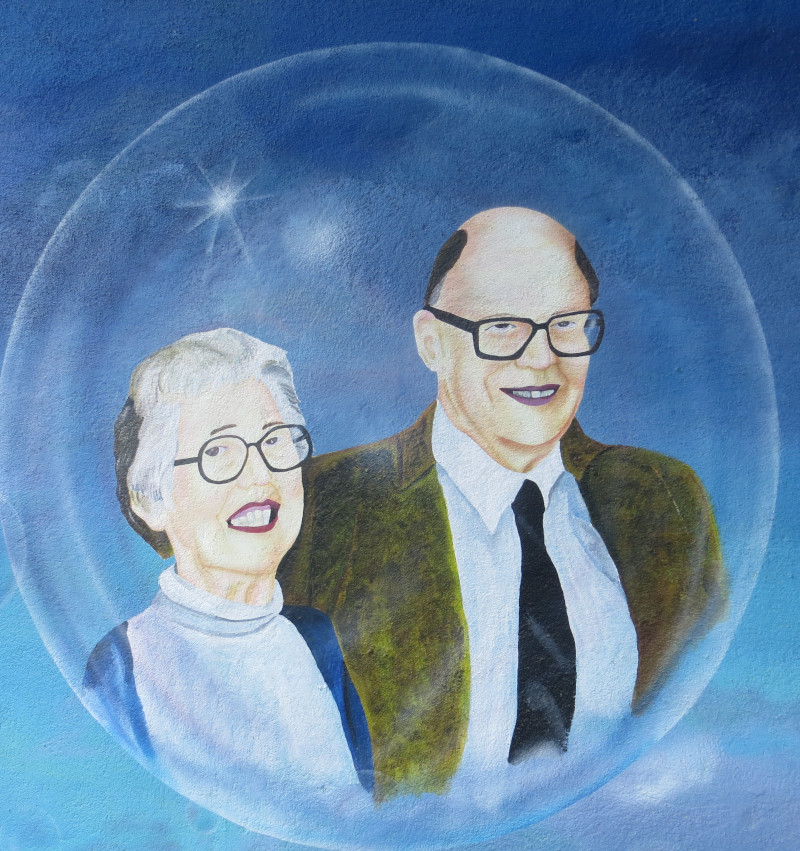
Cele and Axel Meyer
In 2019, we also had to say goodbye in April 2019 to our beloved colleague Veerle de Vocht who decided to return to Belgium with her young family. We are very grateful to Veerle for all the hard work, talent and commitment she dedicated to us and the communities we serve for over two years.
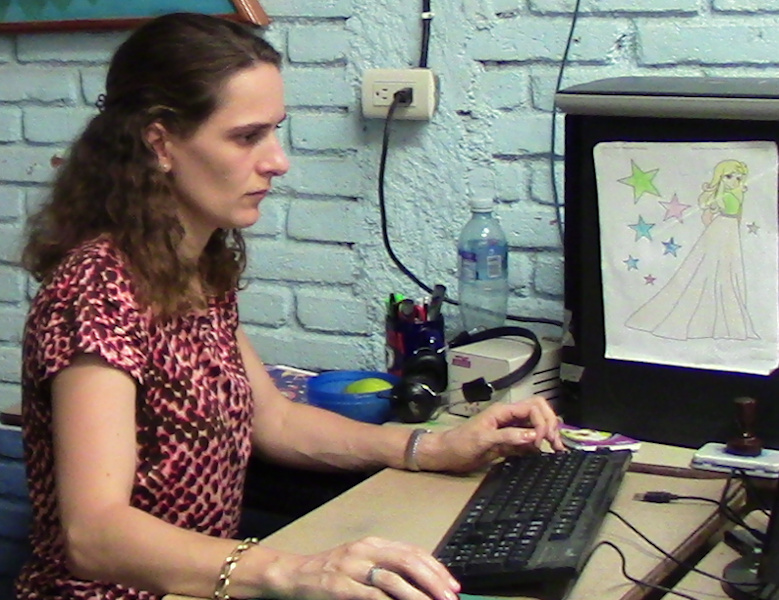
Veerle de Vocht
Programs
2019 Medical and Dental Brigades
In 2019 we received the annual medical brigade organized by Dr. Peter Loewinthan via Dot House Health of Boston as well as a brigade from the Boston University School of Dental Medicine. In conjunction with these two medical and dental health groups we were also very fortunate to receive visits from staff of Boston University's School of Social Work and from Katie London, a teacher of children with special needs. Thanks to these visits we were able to broaden our work addressing the needs of local people in Estelí and also strengthen our institutional relationships with the local Health Ministry, the Education Ministry, the Ministry of the Family and the relevant faculties of the local campus of Nicaragua's National Autonomous University
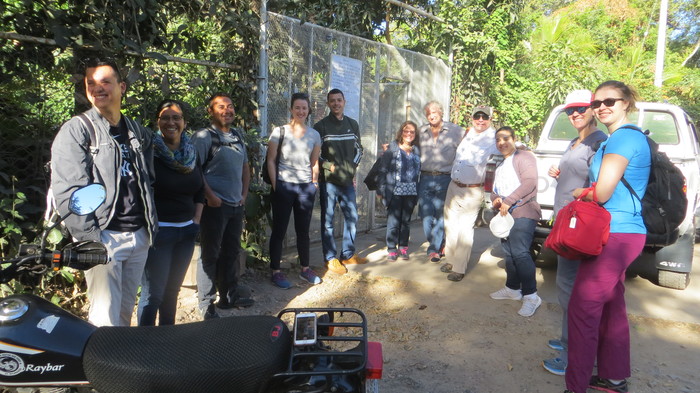
The medical brigade prepares to set out for a local community
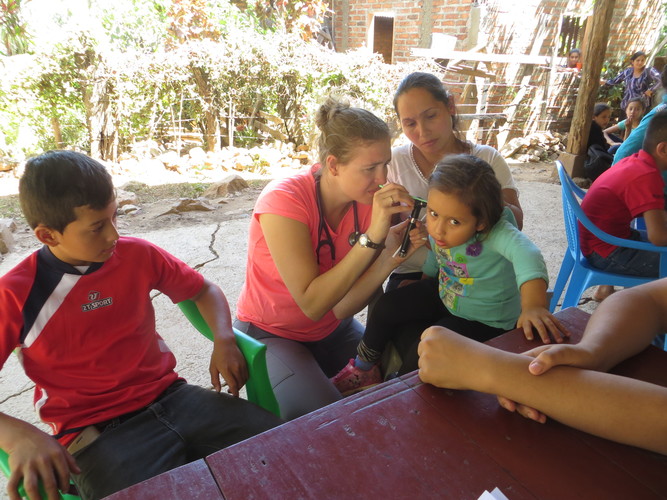
Examining a patient in the rural community of La Montañita, near San Nicolás
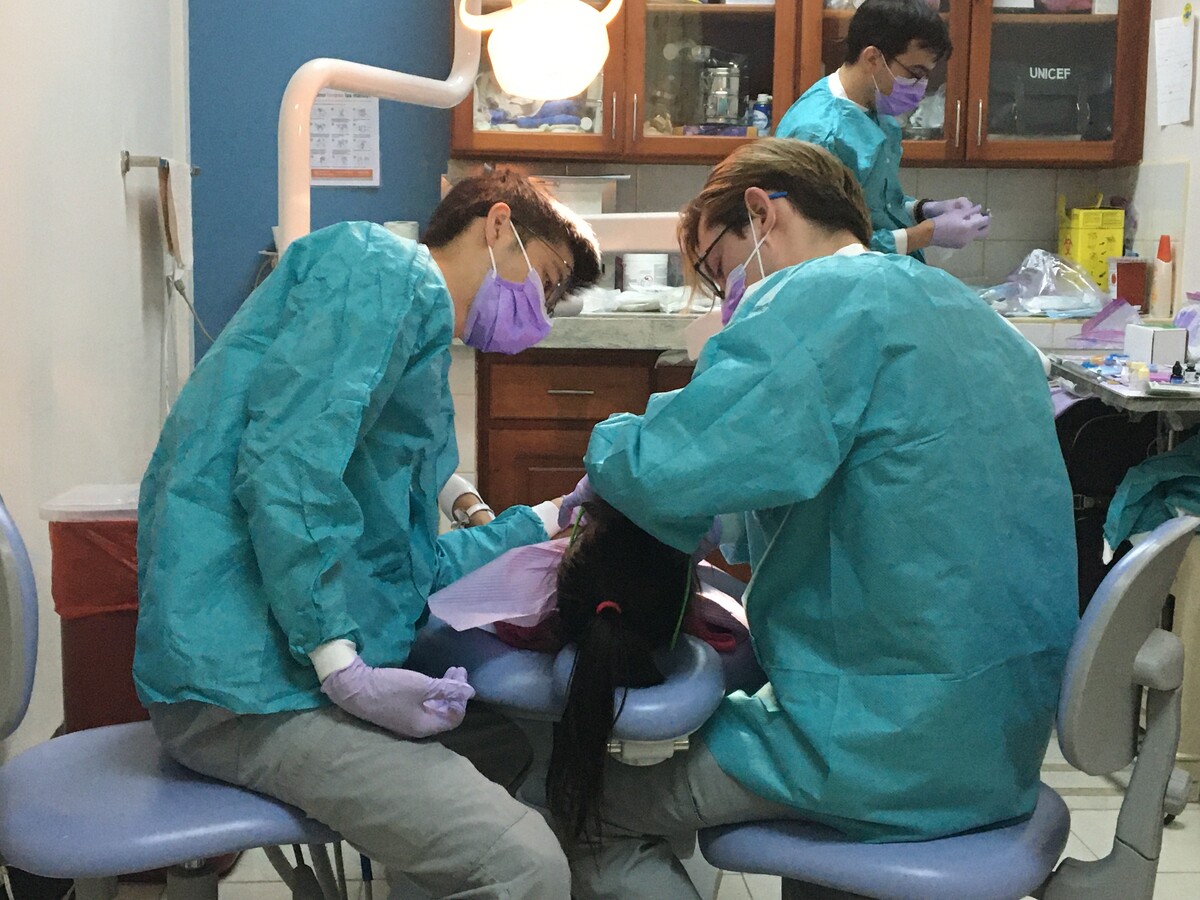
Dental medicine students from the University of Boston at work in Estelí's municipal health center
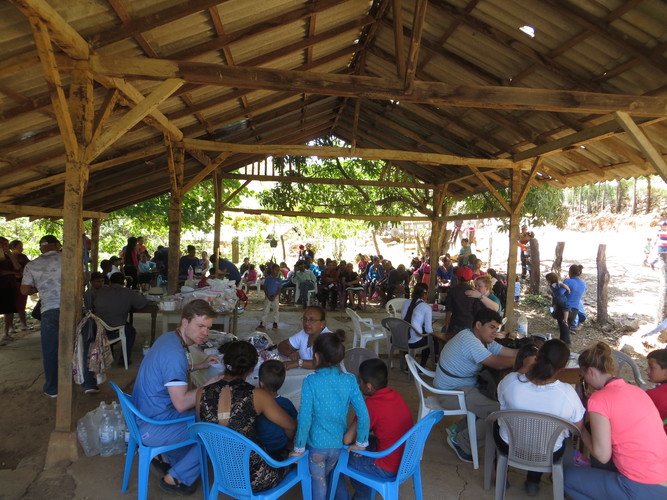
This community made available their local evangelical church for the medical brigade to attend patients
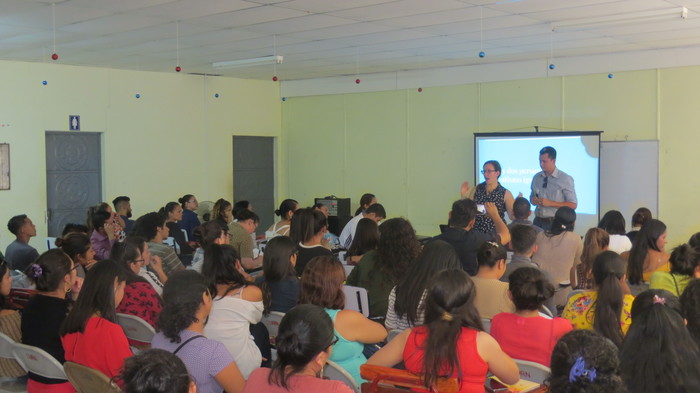
Katie London with students of the local campus of Nicaragua's National Autonomous University
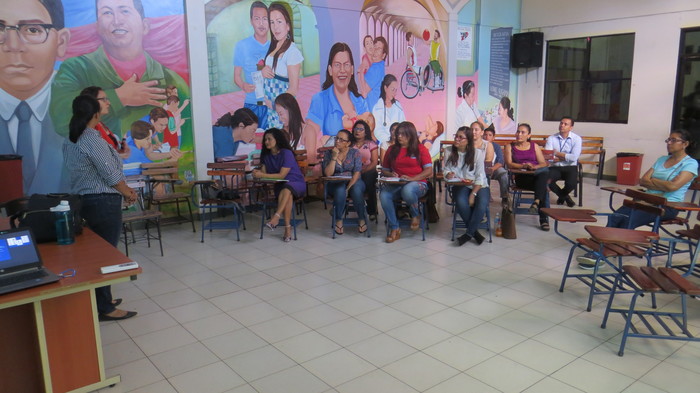
Katie London discussing special needs teaching methodologies with local health workers and educators
Estelí Women's School
Apart from its secondary education work, the Estelí Women's School has also coordinated with the Ministry of Education training activities to improve the methodological practice of primary school teachers in rural areas. Our colleague Veerle de Vocht completed a series of videos to help primary school teachers improve their teaching methodology using "Learning by Doing" techniques for teaching Spanish and for teaching Mathematics. We are very grateful to Judy Richardson, Morgan Smith and Alan Olds for making possible the production of these training materials.
The Estelí Women's School had a smaller than usual matriculation in 2019 because the Ministry of Education introduced a new curriculum for our adult students which extended the number of years required for them to achieve their baccalaureate from two to four, which many of our students found to be a disincentive. So the number of students studying with us dropped from over 300 in 2018 to under 200 in 2019. This did not affect our women's scholarship program. We gave scholarships to over 60 women from low income families in 2019.
We continue to supplement the standard baccalaureate curriculum with classroom workshops on personal development and preventive health. As in previous years we also made sure our women students had free transport to their barrios after class each night. Towards the end of 2019 we worked closely with the Ministry of Education to devise a curriculum more suited to the needs of our adult students which we have successfully implemented in 2020.
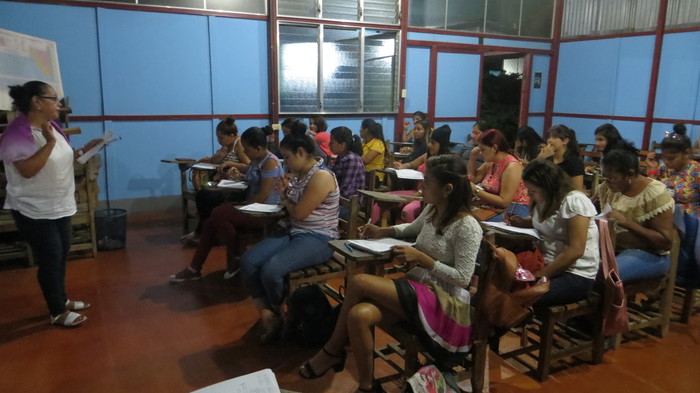
Spanish teacher Luz Danelia Ruiz with a class of women students
Sones Segovianos - Music, dance and art education
In 2019 the music, dance and art education programs gave music education classes to a total of 52 students. 25 students were aged 6-12 ( 9 boys and 19 girls) and 24 students were aged 12 to 18 (6 boys and 18 girls). Art classes were imparted to 34 students (16 boys and 18 girls), 13 were aged under 6 (7 boys and 6 girls), 18 were aged 6-12 (9 boys and 9 girls) and 4 were aged 12-18 (1 boy and 3 girls). 22 students, all girls, took dance classes, 6 were aged under 6, 14 were aged 6-12 and 2 were aged 12-18
As in previous years, the music program imparted theory classes using the Suzuki method and instrumental tuition in all the main instruments. Students also learned how to play together via a wind ensemble, a string ensemble and a choir. The program teaches classical, modern and traditional Nicaraguan music. In 2019 the staff of four music teachers imparted 23 classroom hours a week. The art classes consist of tuition in drawing and painting with one art teacher imparting 6 classroom hours a week. The dance program offered classical, modern and traditional Nicaraguan dance classes with one dance teacher imparting 5 classroom hours a week.
We are very grateful to Hannah Curteis for her inspiration and guidance in making this program possible over more than ten years from 2007 to 2018.
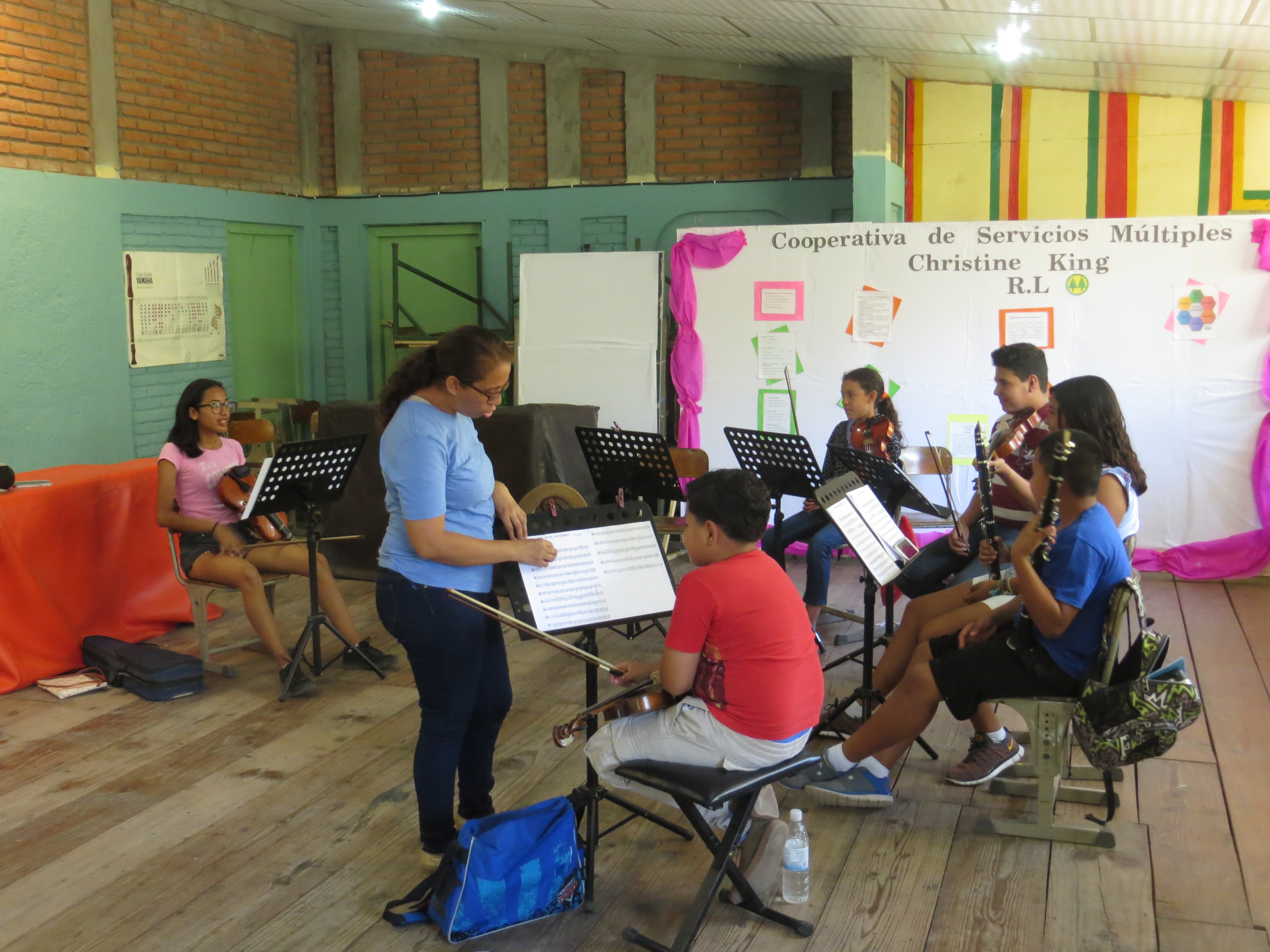
Music educator Mayra Velasquez with students
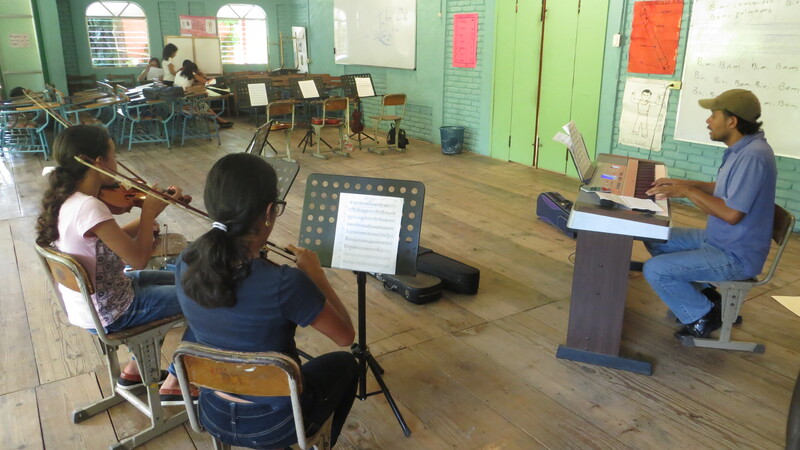
Music educator Byron Guevara with two of his students
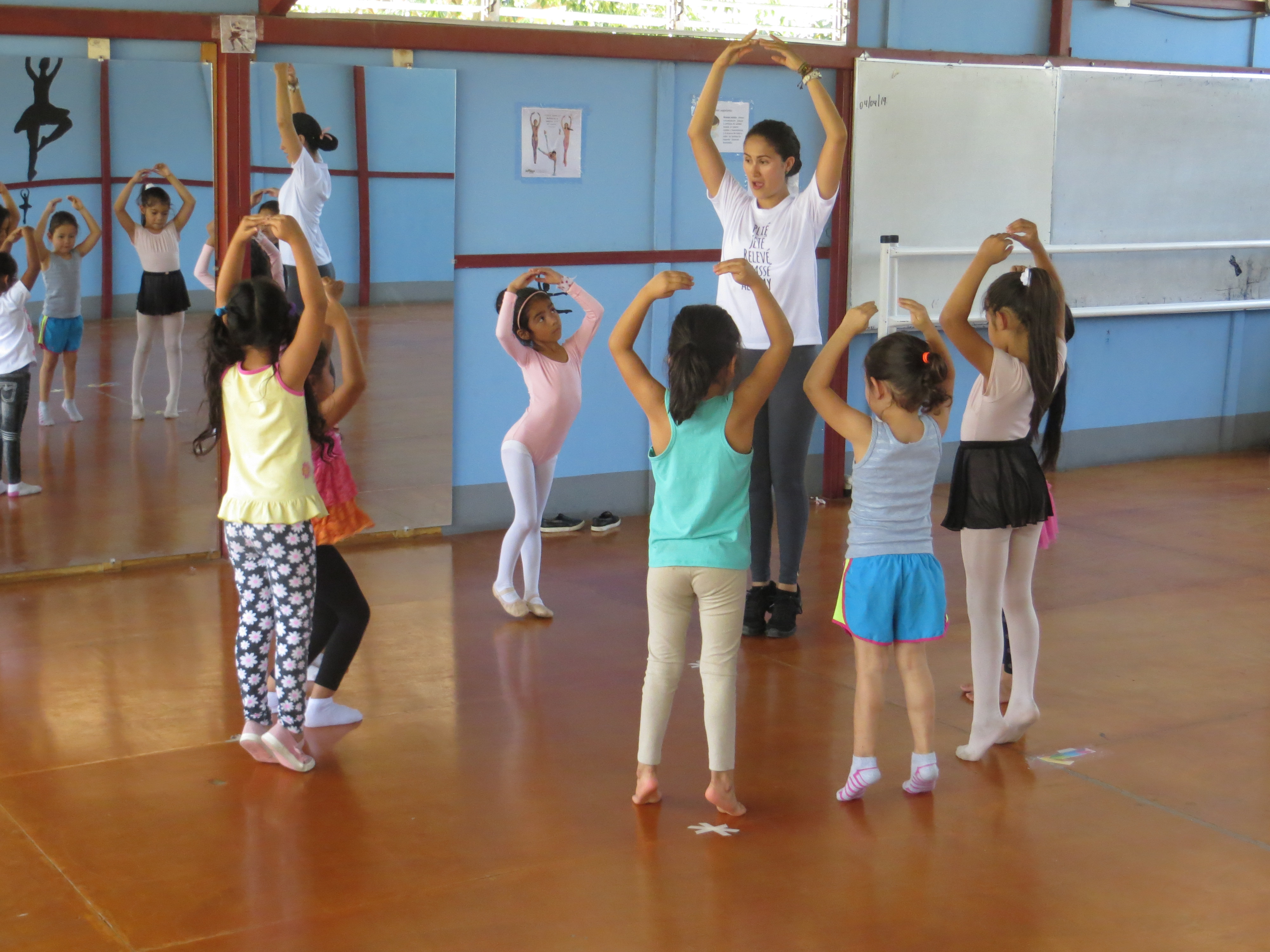
Dance educator Maria Selena Chavarría with some of her younger dance students
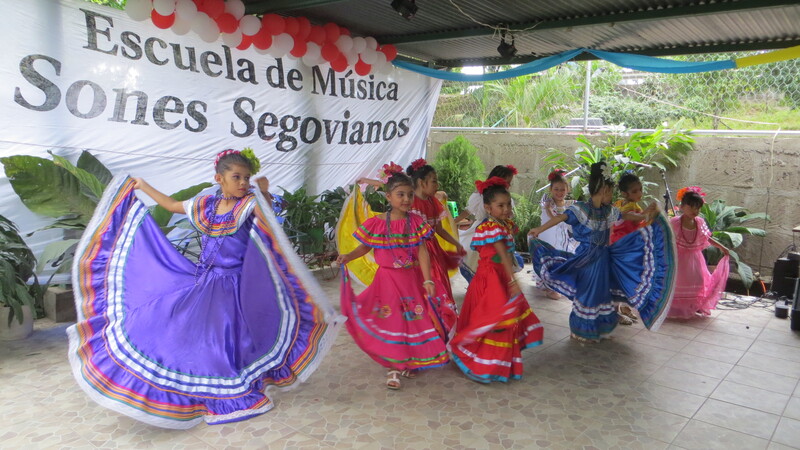
Dance students perform for a Sones Segovianos concert
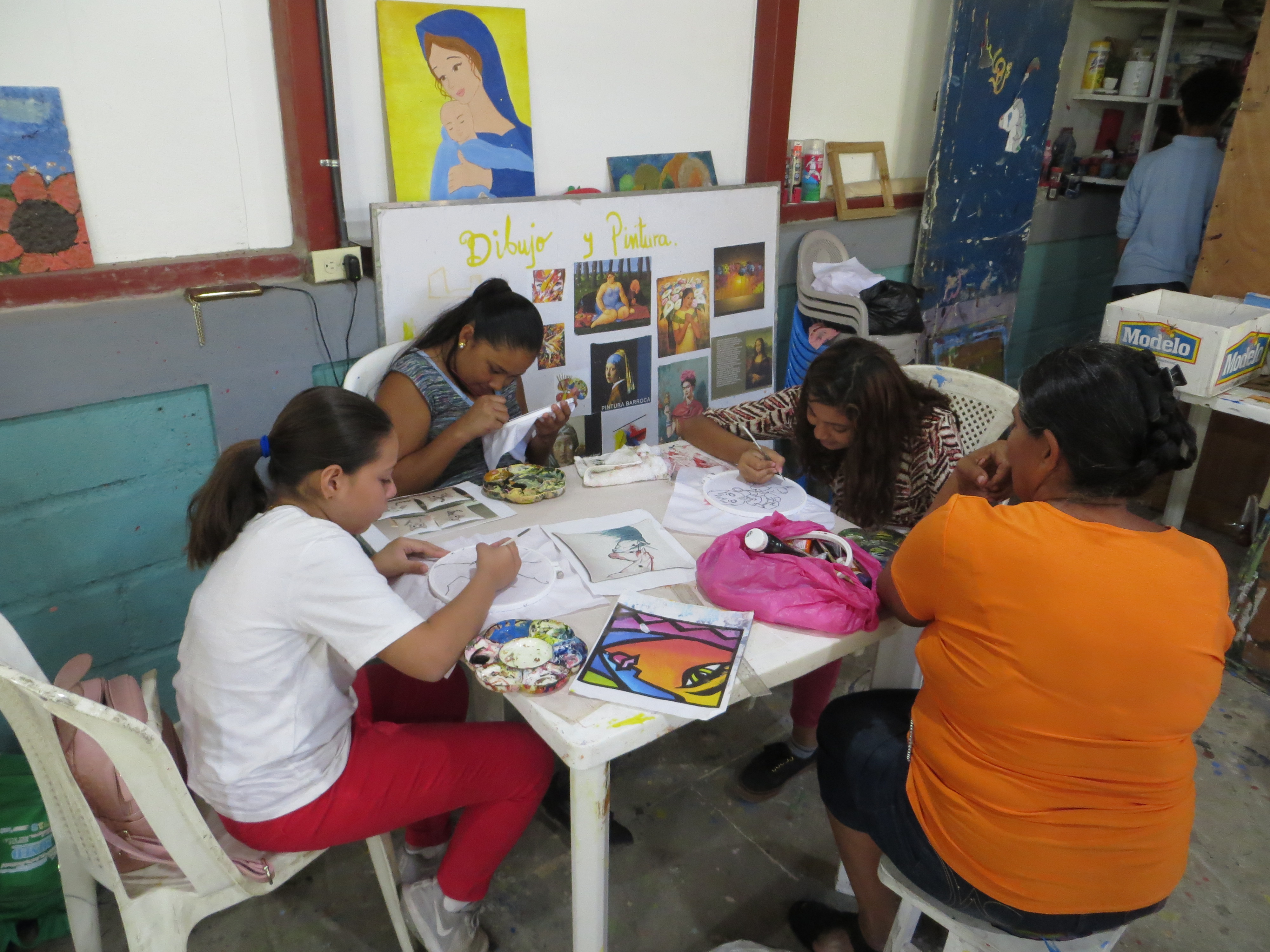
Art students working with fabric
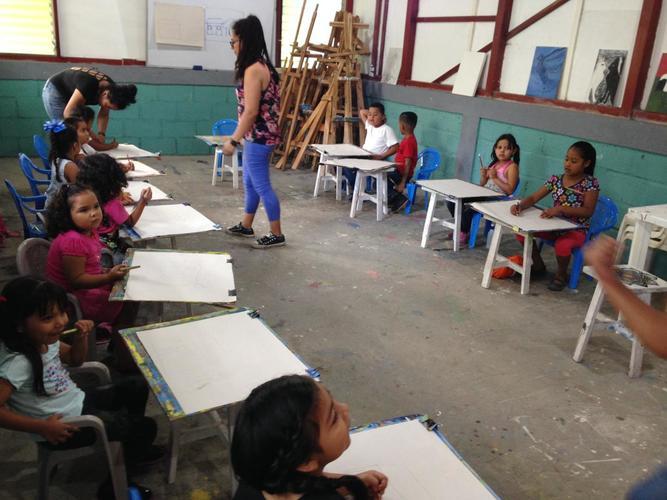
Art educator Francisca Valdivia with some of her younger students
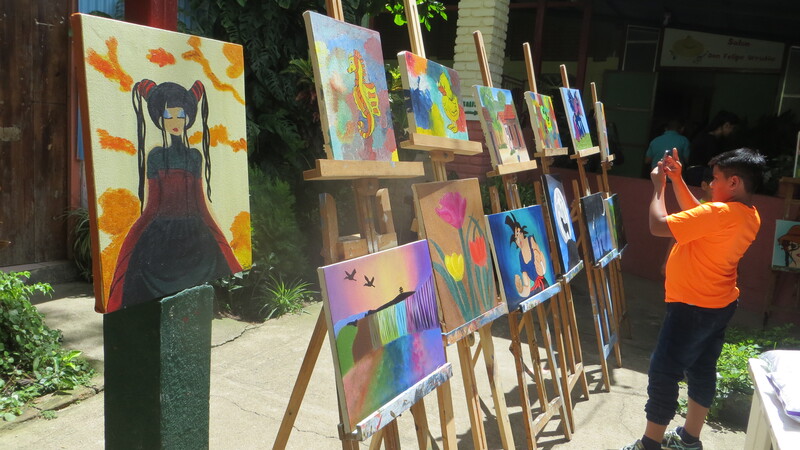
An exhibition of the art program's work
Intervention, Change, Education and Service (ICES) - Addressing domestic violence
The outreach work of this program addressing domestic violence consists of educational workshops and self-help groups in 4 rural communities around the city of Estelí and also in the Casa Materna located in the city of Estelí. The program of educational outreach workshops served three urban schools, (Escuela Belén Fé y Alegría, Colegio San Ramón Wanda, Colegio Puertas Abiertas) for a total of 199 students (69 boys and 130 girls) and four rural schools (Escuela Puertas Azules, Escuela La Quinta, Escuela El Paraíso, Escuela El Robledal) for a total of 390 students (153 boys and 237 girls) .
The self-help groups serve a total of 133 adults (47 men and 86 women) in the four rural communities of Puertas Azules, Santa Cruz, Isiquí and La Quinta and also the Casa Materna center operated by MINSA hosting women from remote rural communities in the last weeks before they give birth in the local regional hospital.
The program's women’s refuge sheltered over 20 women and girls during 2019. Karen Villarreyna our psychologist has given counseling support and guidance to an average of 9 people a month. Our lawyer Maria Felix Castillo gave legal advice and guidance to over 30 people.
The program has continued to develop its important training work with local professionals and students in coordination with the Ministry of the Family, the Public Prosecutor’s office, the Education Ministry, the Health Ministry and the local campus of Nicaragua’s National Autonomous University.
Supported by Boston-based family psychologists Fran Smith, Lyn Styczinski and Len Greenberg the program organized and implemented a Systemic Therapy course for students and graduate students of the faculties of Psychology and Social Work with the participation of Dr. Luz López of Boston University’s Social Work faculty. The course aimed to improve local capacity for addressing problems of domestic violence in the municipality of Estelí.
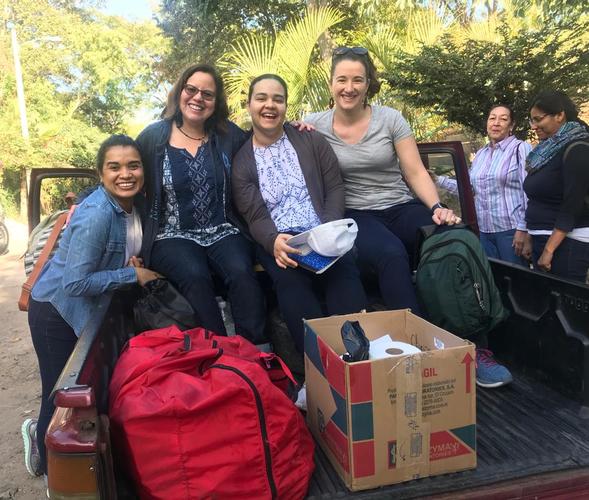
In 2019 we received a group from Boston University's Shool of Social Work. (l to r) Superemos psychologist
Karen Villarreyna, Dr. Luz López, Joseli Alonzo and Rachel Bowers-Sword,
Superemos legal worker Maria Felix Castillo, interpreter Omara Hidalgo
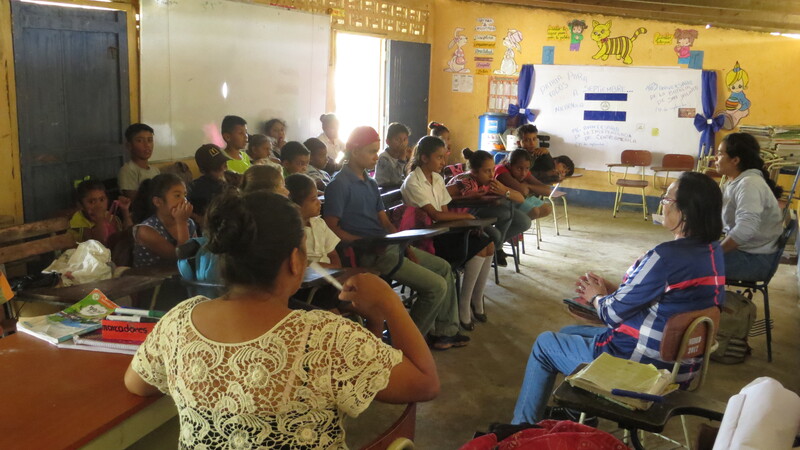
Karen Villarreyna and Maria Felix Castillo impart a workshop with rural primary school children
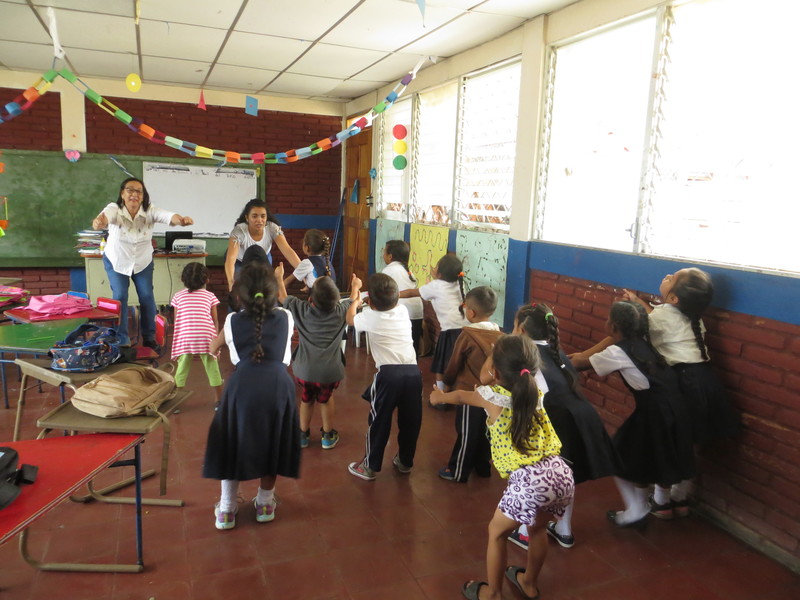
As part of their local primary school program, Karen and Maria Felix also work with very young children
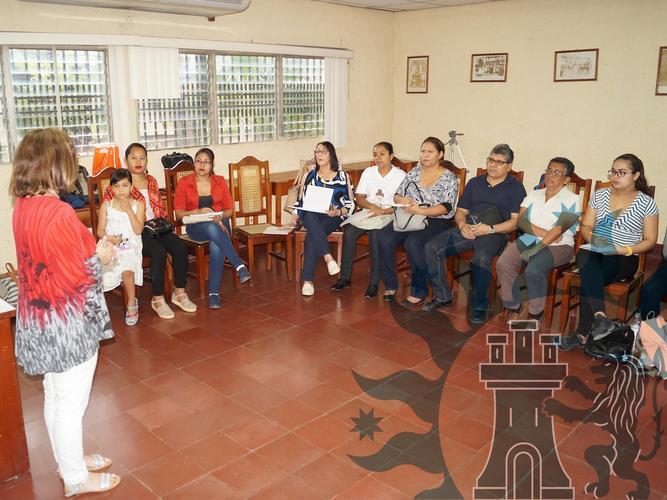
Dr. Luz López of Boston University working with a group of staff from the local
Regional Multidisciplinary Faculty of Nicaragua's National Autonomous University in Estelí
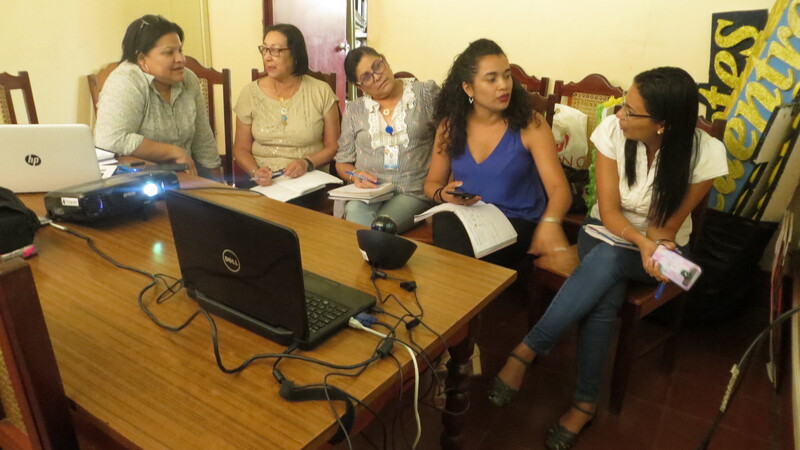
Karen and Maria Felix developed workshops via the internet with colleagues from the local university
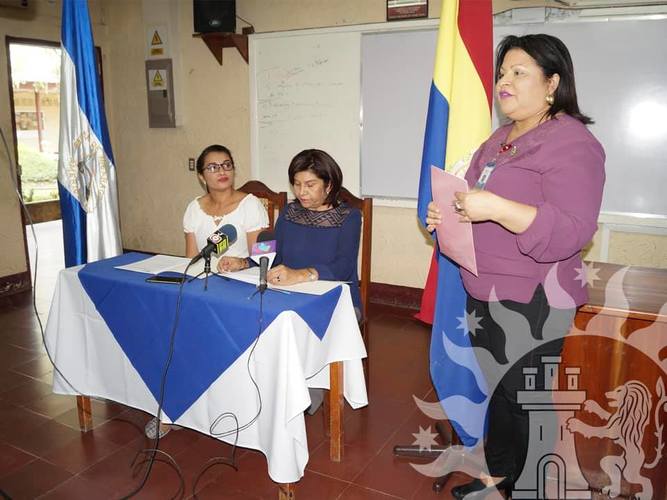
Miurell Suarez of the Regional Multidisciplinary Faculty of Nicaragua's National Autonomous University
in Estelí addresses a meeting to formalize cooperation the university and Superemos
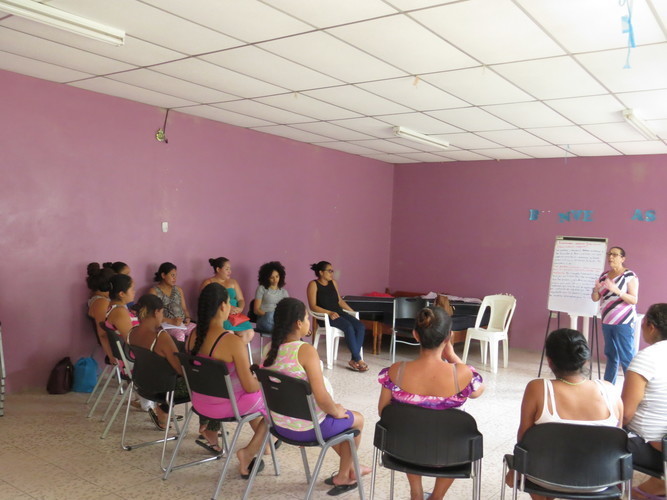
Maria Felix addresses a group of rural women at the local Maternity Shelter in Estelí
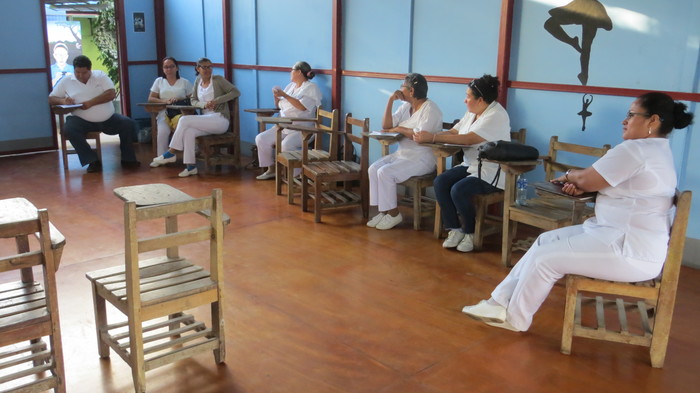
Nurses from the local Health Ministry in a workshop by Lyn Styczinski and Len Greenberg
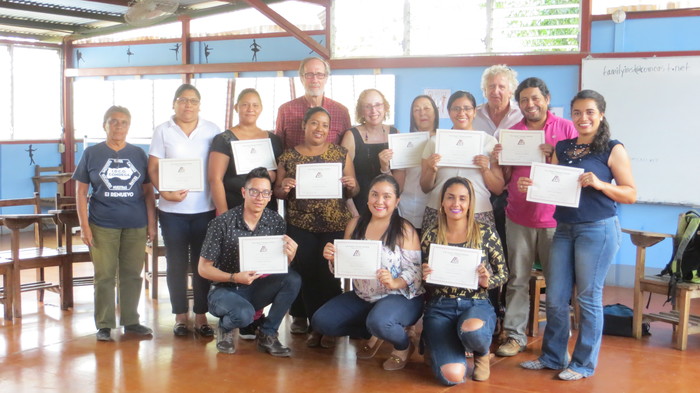
Lyn Styczinski and Len Greenberg with local social workers and psychologists
who completed the workshop with them (back row center)
Dental preventive health program
Since 2015, Dra. Michelle Henshaw of Boston University's Henry S. Goldman School of Dental Medicine has developed a preventive dental health program in coordination with the local Health Ministry, the local Ministry of the Family and Superemos, working with over 800 children under 6 in the local preschool system in Estelí. The program has trained local preschool educators to improve and enhance family dental hygiene education and apply fluoride varnish every three months to the children in their preschools. The program has been very successful in achieving the support and cooperation of parents and children who themselves have become active educators promoting good dental hygiene practice in their families and communities.
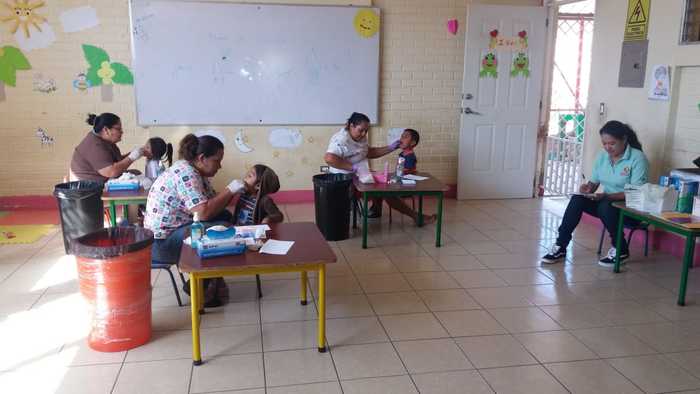
Pre-school educators applying fluoride varnish
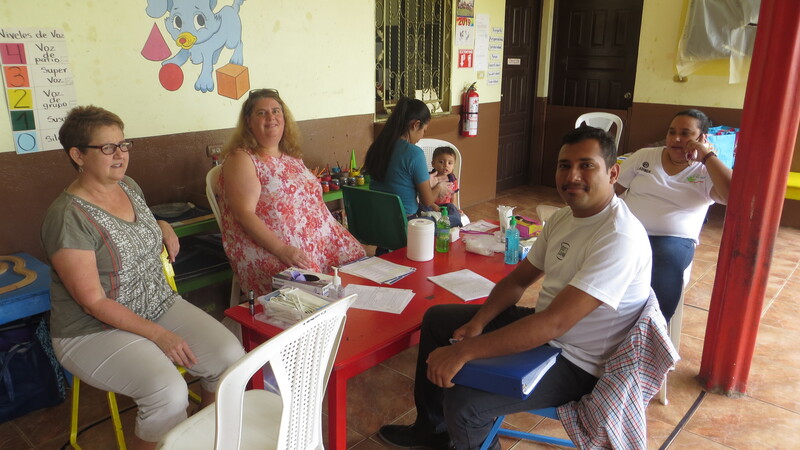
Dr Corinna Culler (left) and Dr. Michelle Henshaw of Boston University School of medicine
take a break from evaluating the program with interpreter Eliezer Salgado
Vocational training and personal development
In 2019 our vocational training program provided training to a total of 48 people (37 women and 11 young men) as follows:
- bread and cake making program - 4 hours each Saturday from August to November for 10 women
- solar panel production and installation for 4 people (two men and two women) over 12 classroom hours in May and June and 12 people (6 men and 6 women) in a one day workshop held in September
- shoe making – full time (30 hours a week) for three women and one man for 8 months from May to November
- ceramics – full time (30 hours a week) for four women and four men 8 months from May to November
- sewing – four hours a week every Saturday for 8 women from August until November
- craft skills – as occupational therapy for 6 women in the women’s shelter totaling an average of 6 classroom hours for each student
We have also developed a digital sublimation project which we will incorporate into our training program in 2020
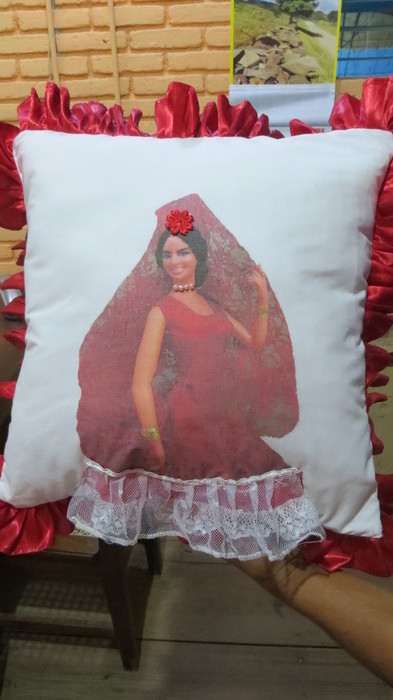
Our sewing and digital sublimation workshops developed ways
to coordinate together to produce products for sale and to teach
new skills to participants in our vocational training workshops.
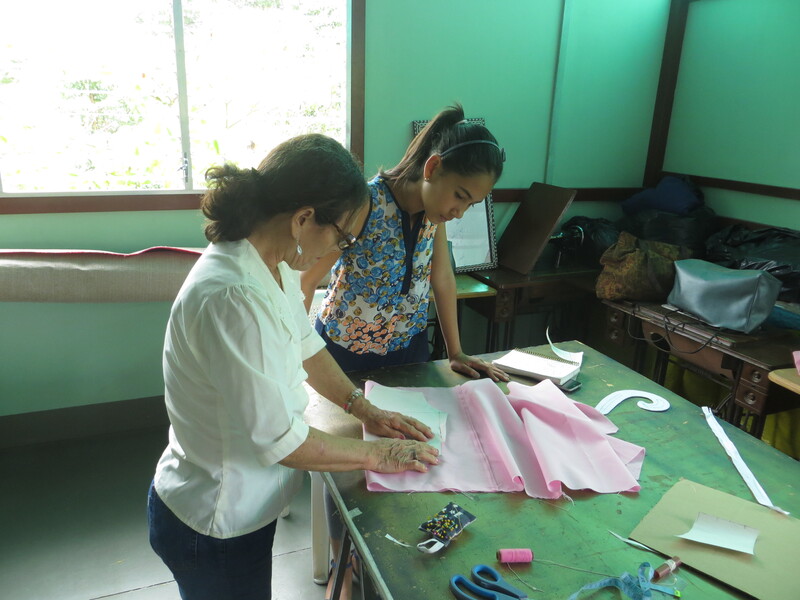
Sewing teacher Maria Osorio gave classes during 2019
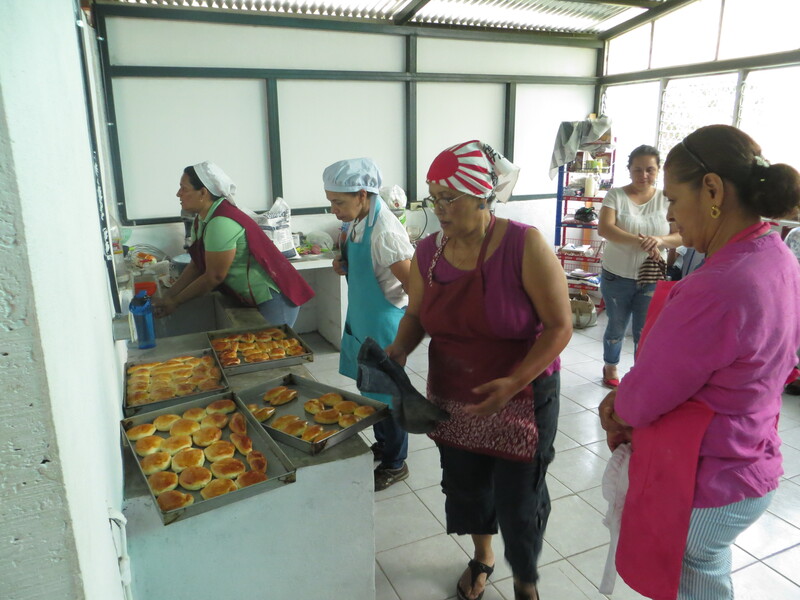
Educator Luisa Duarte with her baking class
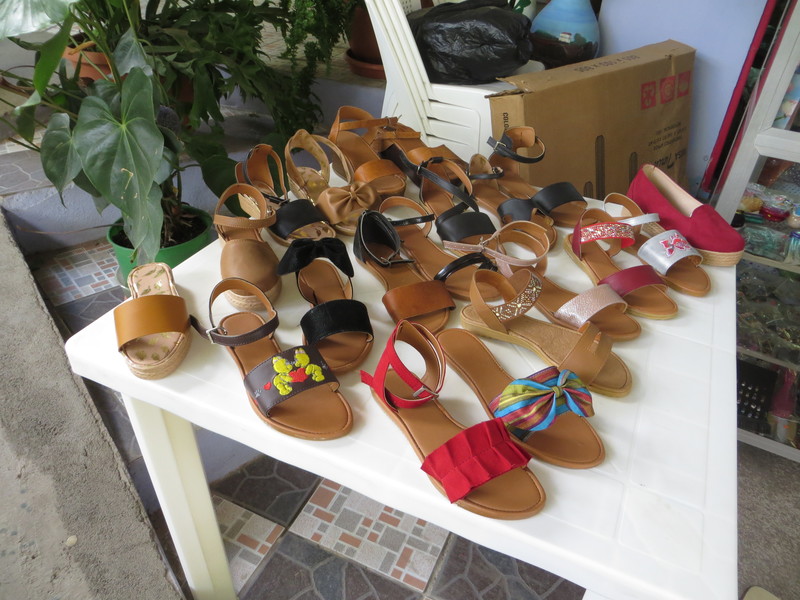
Sandals from the shoe-making workshop
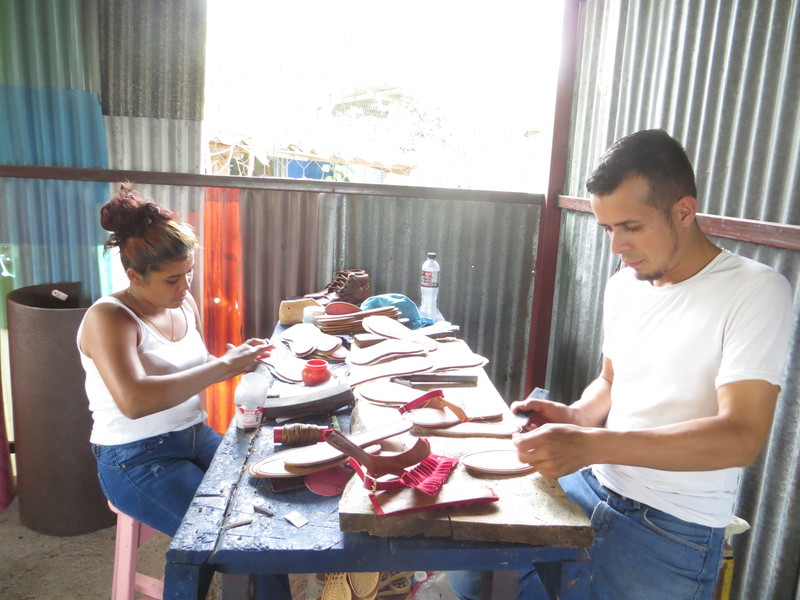
students at work in the shoe workshop
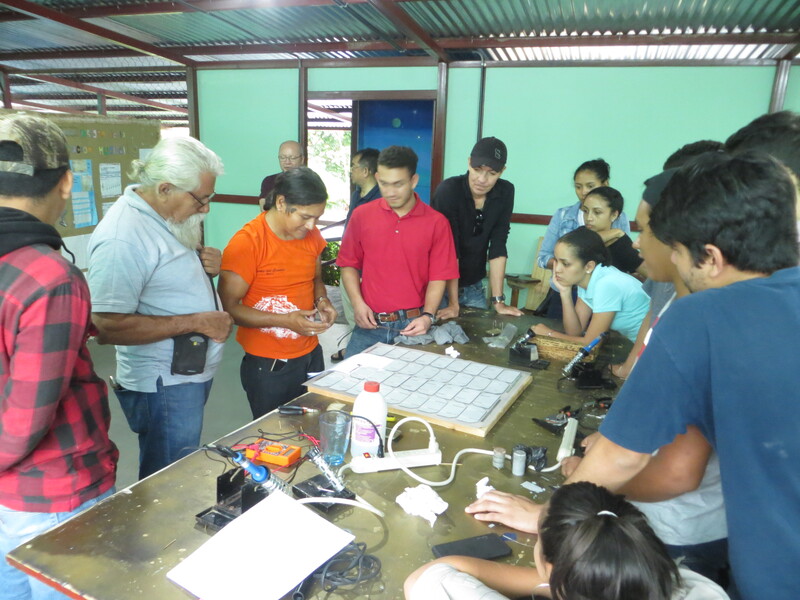
Allan Parrales (orange shirt) gives a solar panel workshop to students from the local National Autonomous University
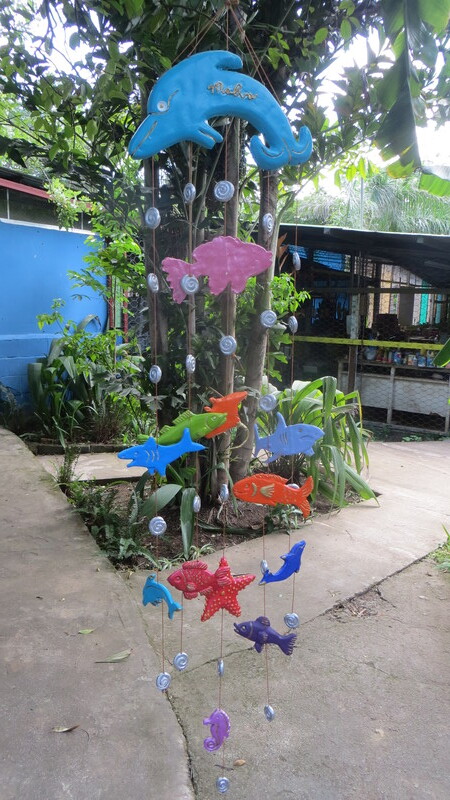
The ceramic workshop makes mobiles of different kinds as well as other ceramic ware
Preventive Health care
In 2019, our preventive health program carried out the following activities :
- monthly visits to three communities (Barrio Nuevo Amanecer, San Pedro, Paso Ancho) serving a total of 224 children ensuring dental hygiene and screening for skin and scalp infections – the visits include a talk on preventive health care mattes such as reproductive health, dental hygiene and general good practice to ensure safety in the home
- free weekly medical attention for students of the Estelí Women’s School generally serving 10 patients each visit – the medical attention is given by a gynaecologist from the local municipal health center offers an average of 20 papanicolau exams each month with follow up to cases as needed.
- weekly workshops with the Estelí Women’s School’s secondary education students on personal development, reproductive health, domestic violence, gender equality and related matters
- monitoring of 6-8 patients a month with chronic health problems such as hypertension and diabetes
- help for 16 patients a month with the purchase o medicines they cannot afford
- support for 2-3 patients a month with laboratory tests not available in the public health system
- support for the annual medical brigade ensuring patient follow-up in the months subsequent to the brigade. In 2019 we gave support to over 250 patients
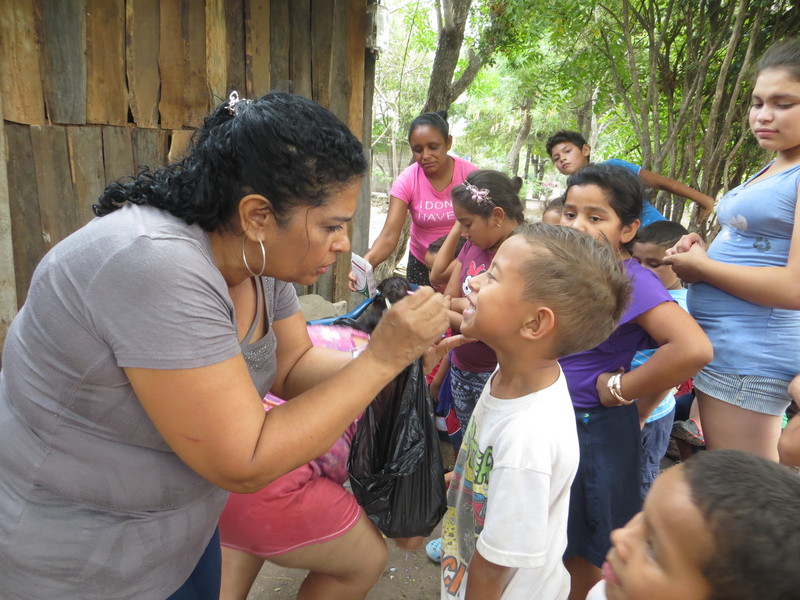
Superemos President Gladys Ruiz González carries out a dental hygiene preventive health activity in a rural community
| Income and expenditure report for 2019 | US$ |
| Brought forward from 2018 | 25798 |
| Donated income | |
| Christine King Memorial Trust | 7787 |
| Dorchester House Multi Service Center | 14995 |
| Jonathan Benjamin | 5000 |
| Private foundation | 60000 |
| Medical brigades supporters | 24875 |
| Peter Loewinthan and friends | 20901 |
| Proyectos Sociales Albanisa | 9600 |
| Kendo Brands | 3000 |
| Ayuda Nicaragua Association of Japan | 1000 |
| Various individual donations | 7088 |
| Local contributions | 2700 |
| Bank interests | 138 |
| Total income | 157084 |
| Expenditures | |
| Health Care | 18075 |
| Social work/family violence program | 20051 |
| Music Education | 16962 |
| Vocational training | 18062 |
| Women's secondary education | 17649 |
| Audio visual skills training (Managua) | 8494 |
| Humanitarian assistance | 11772 |
| Administration | 18200 |
| Site maintenance | 11745 |
| Remodelling | 9860 |
| Medical brigades | 24130 |
| Bank commissions and charges | 218 |
| Total expenditure | 175218 |
| Carried forward to 2020 | 7664 |